
Cricket Wireless
Stress less. Smile more.

Process Includes
- Strategy
- Analytics
- UX & UI Design
- Prototyping
- User Testing
What are we solving for?
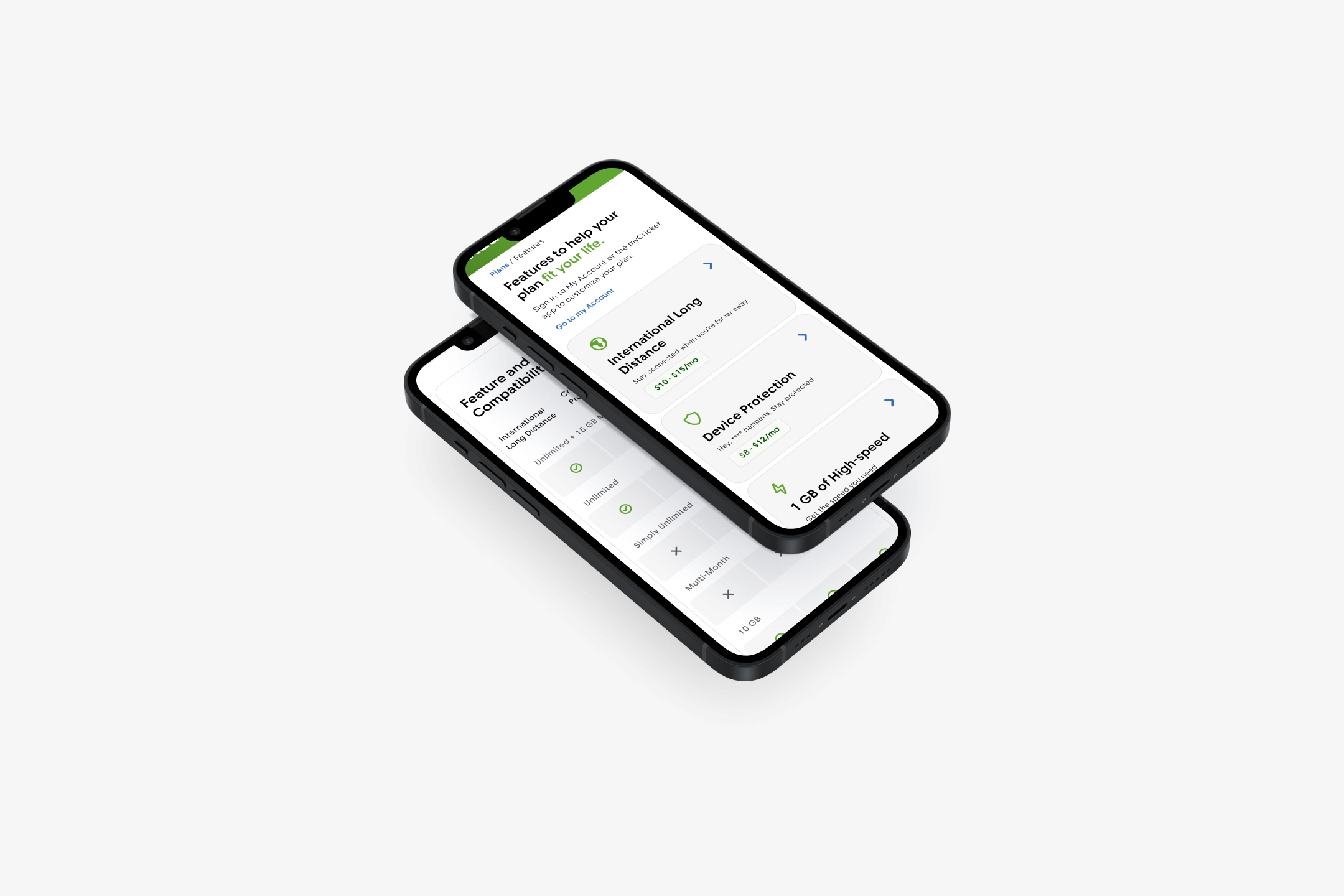
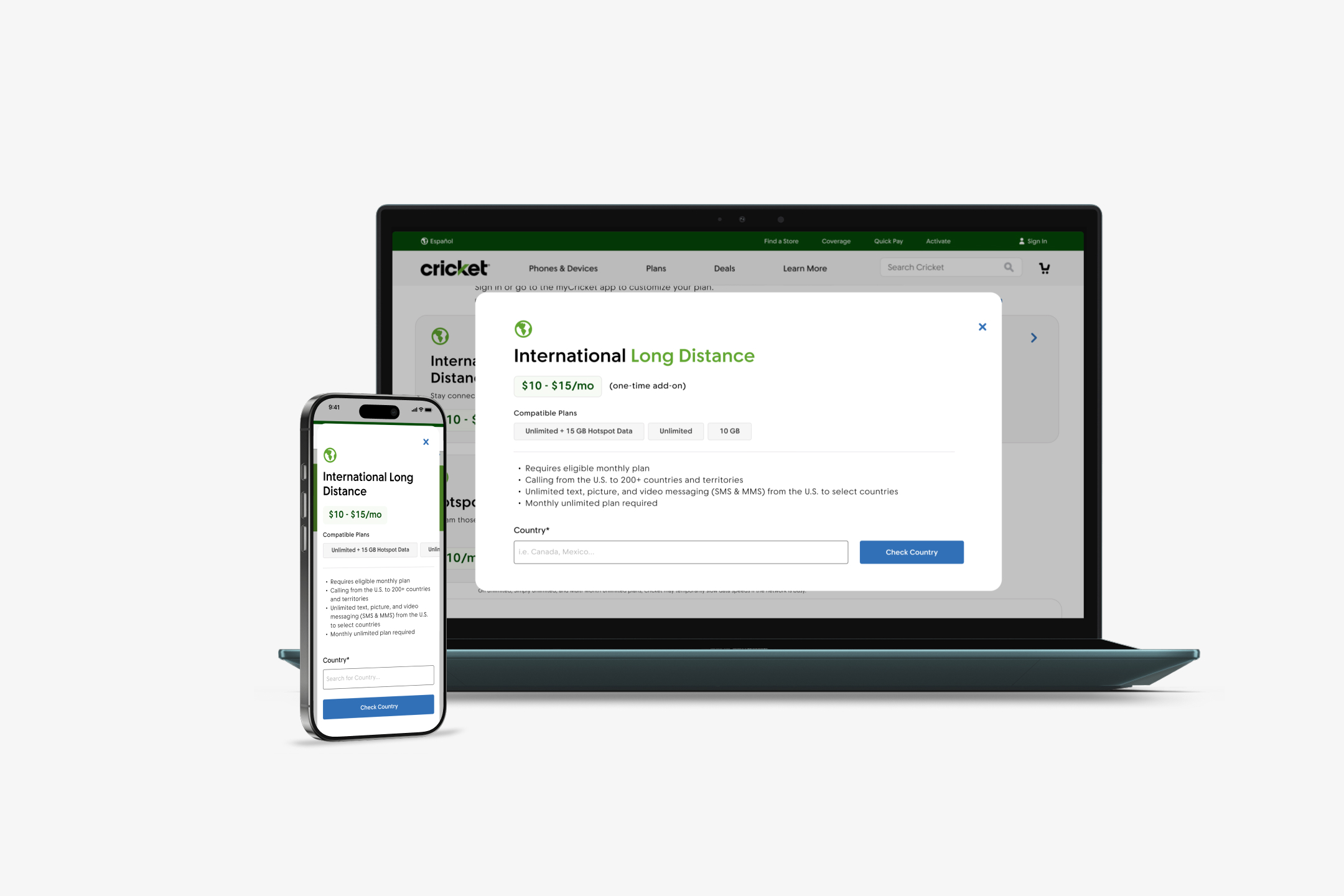
The Cricket Wireless website is a visually compelling and functionally optimized platform aimed at guiding users through the purchase funnel while reducing bounce rates. As I analyzed the design, I noticed several strategic elements that enhance user experience, including the use of grid systems, modular components, and brand-centric color schemes. This case study focuses on how these design choices help users navigate the site intuitively, encourage deeper engagement, and ultimately drive conversions.
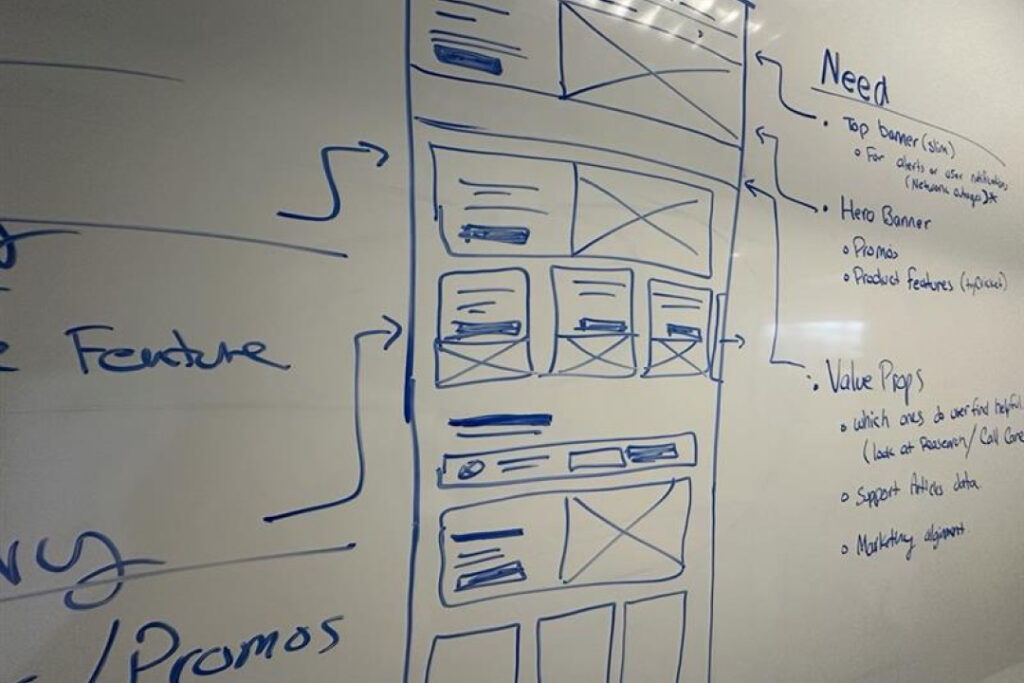
Data & Testing
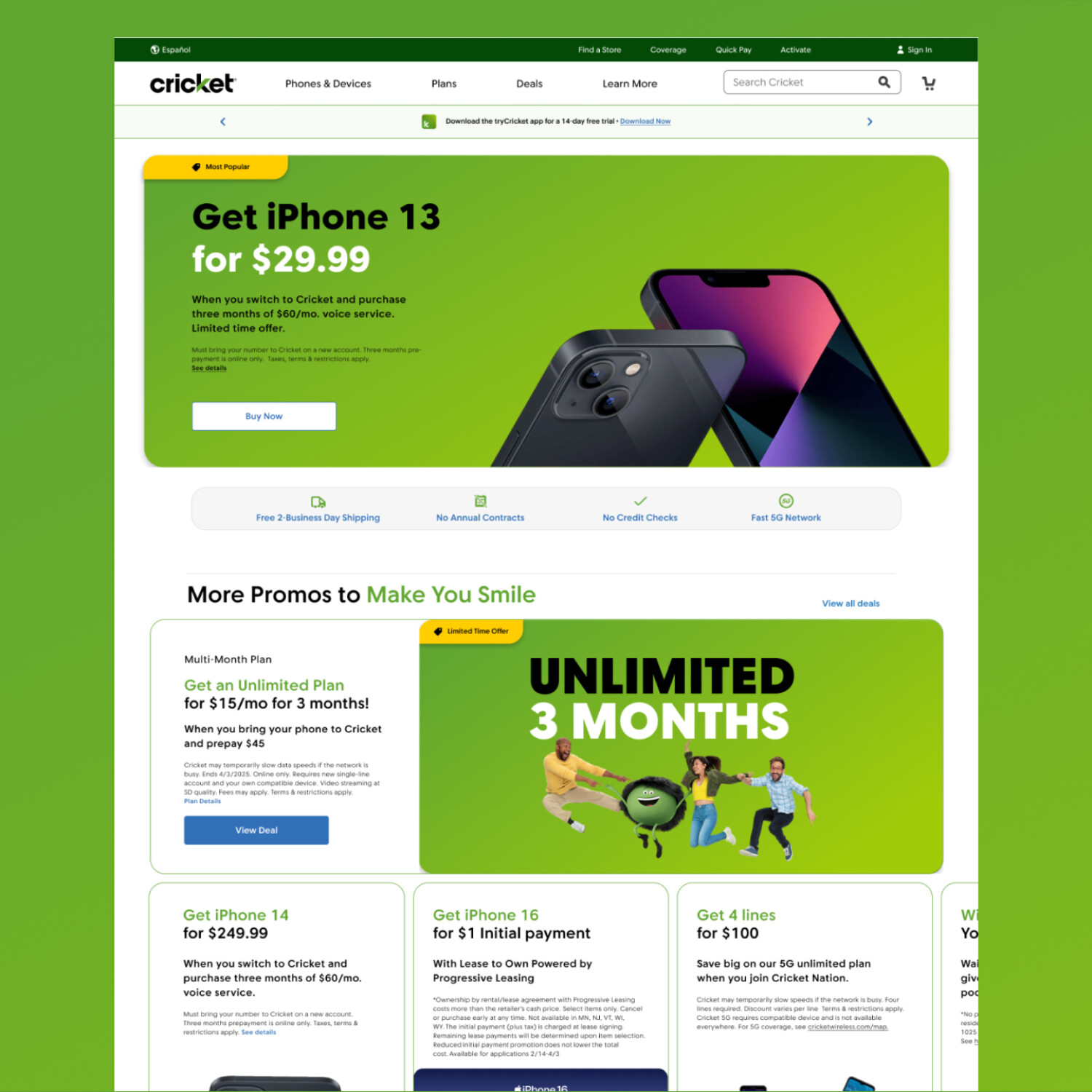
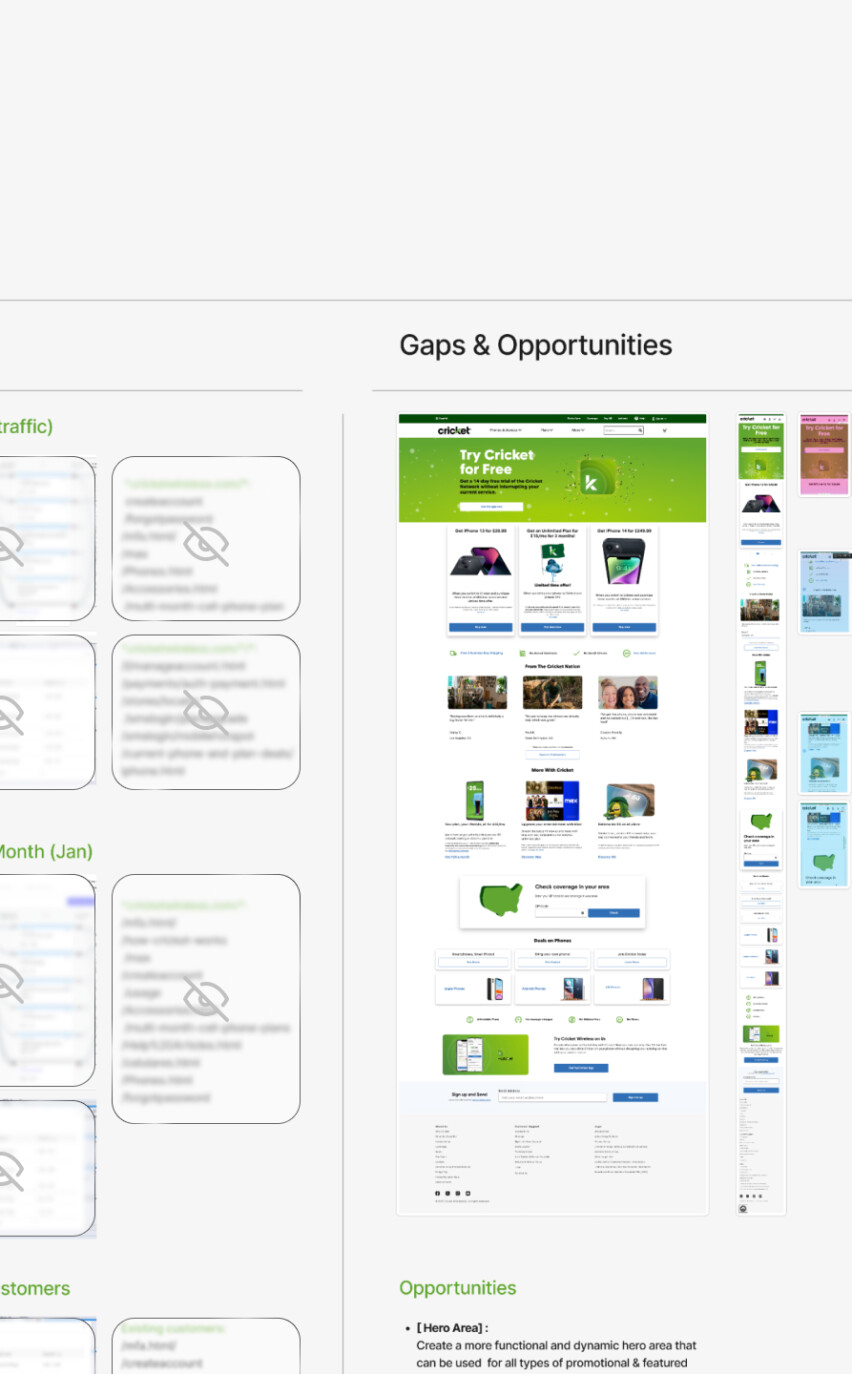
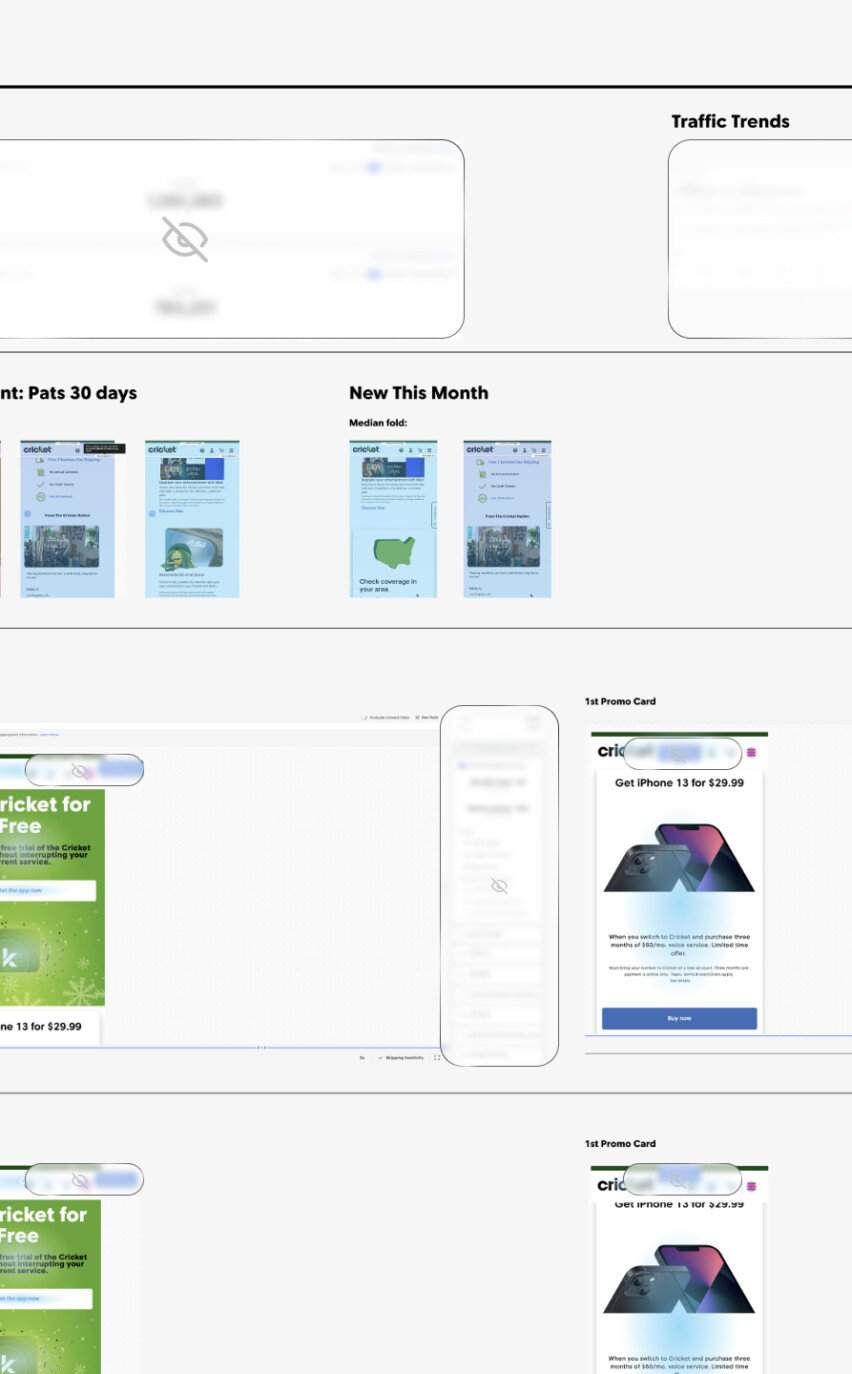
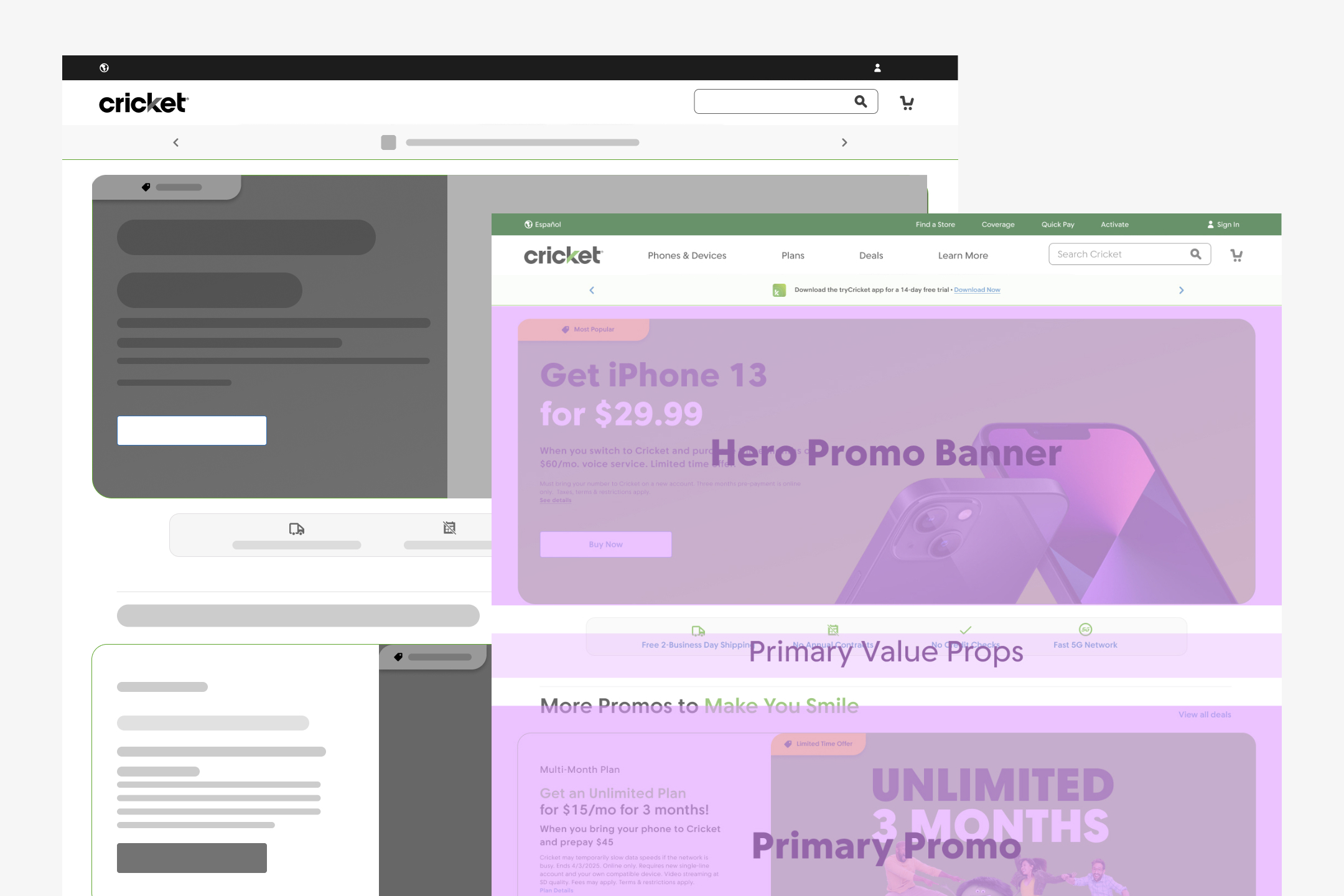
One of the key initiatives in the redesign of the Cricket Wireless homepage was to optimize user engagement and interaction with promotional content while reducing bounce rates. A/B testing was conducted to refine the layout and test various hypotheses about user behavior (Fig.1). One area we specifically evaluated was the impact of removing the testimonial section from the original design to determine its effect on engagement with the secondary promotional content below.
A/B Testing Overview
The primary goal of this experiment was to test whether removing the testimonial section from the homepage would increase user engagement with the promotional cards and drive greater scroll reach to the bottom of the page. The hypothesis was that eliminating the testimonials would reduce visual clutter and cognitive load, allowing users to focus more on actionable promotional content.
Methodology
Using Adobe Target, two versions of the homepage were tested:
- Original Design: Featured testimonials prominently in the layout above the promotional content.
- Test Variant: Removed the testimonial section entirely, allowing the promotional cards to move higher in the visual hierarchy.
Metrics Monitored
- Click-through rate (CTR): Interaction with secondary promotional cards below the testimonials.
- Scroll reach: Percentage of users scrolling to the bottom of the page.
- Bounce rate: Percentage of users leaving the site without engaging further.
The test revealed that removing the testimonials led to a 17% increase in clicks and engagement with the secondary promotional cards. Users interacted more with offers that were once further down the page. Scroll reach to the bottom of the page increased by 87% in the test variant. This indicates that users were more likely to explore the full breadth of the homepage. This result supports the hypothesis that simplifying the layout and prioritizing actionable content improves user focus and interaction. These various findings helped shape the look and structure of the homepage UI strategy.
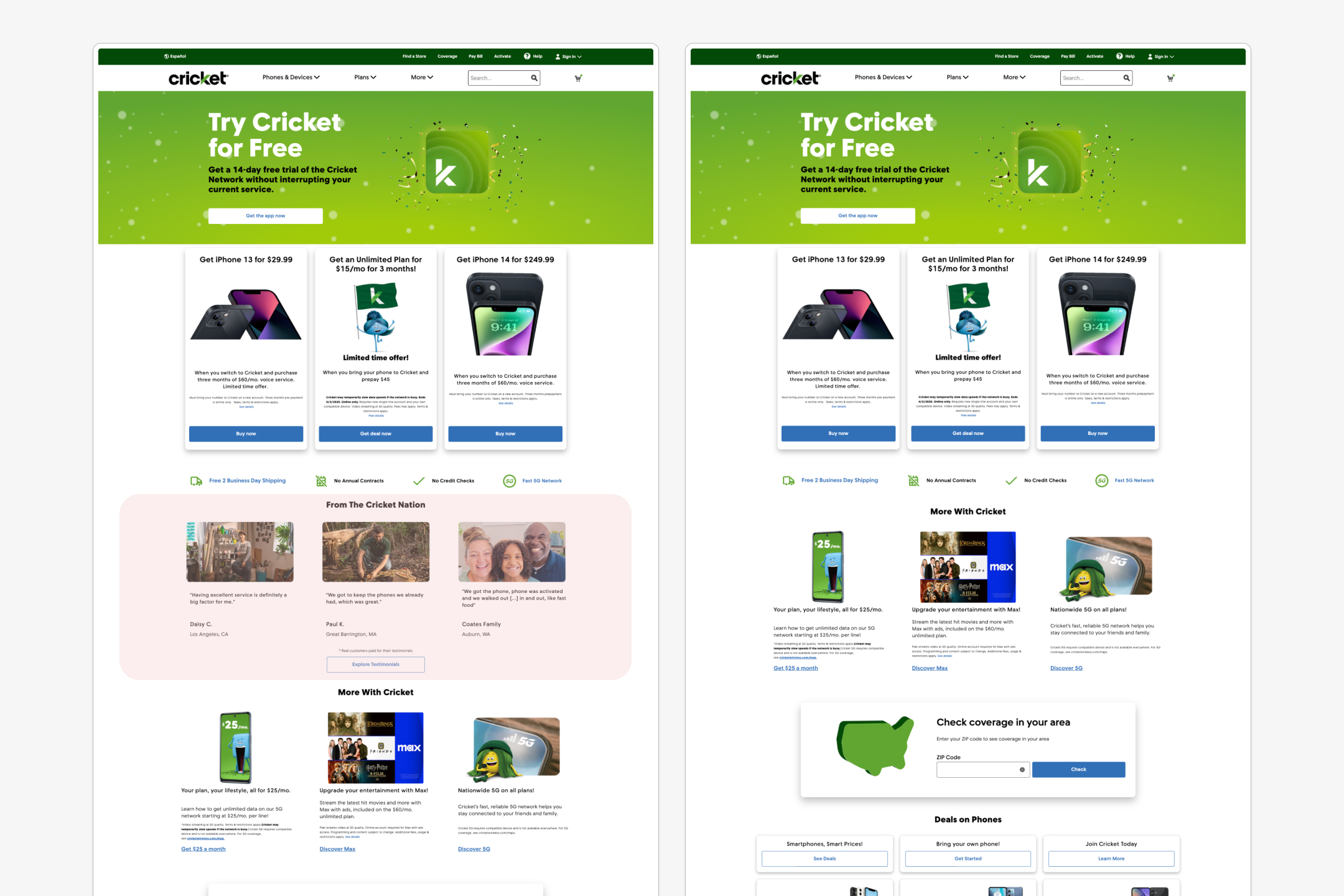
- Fig.1 A/B Testing (left A Control variant, right B variant)
UI Strategy
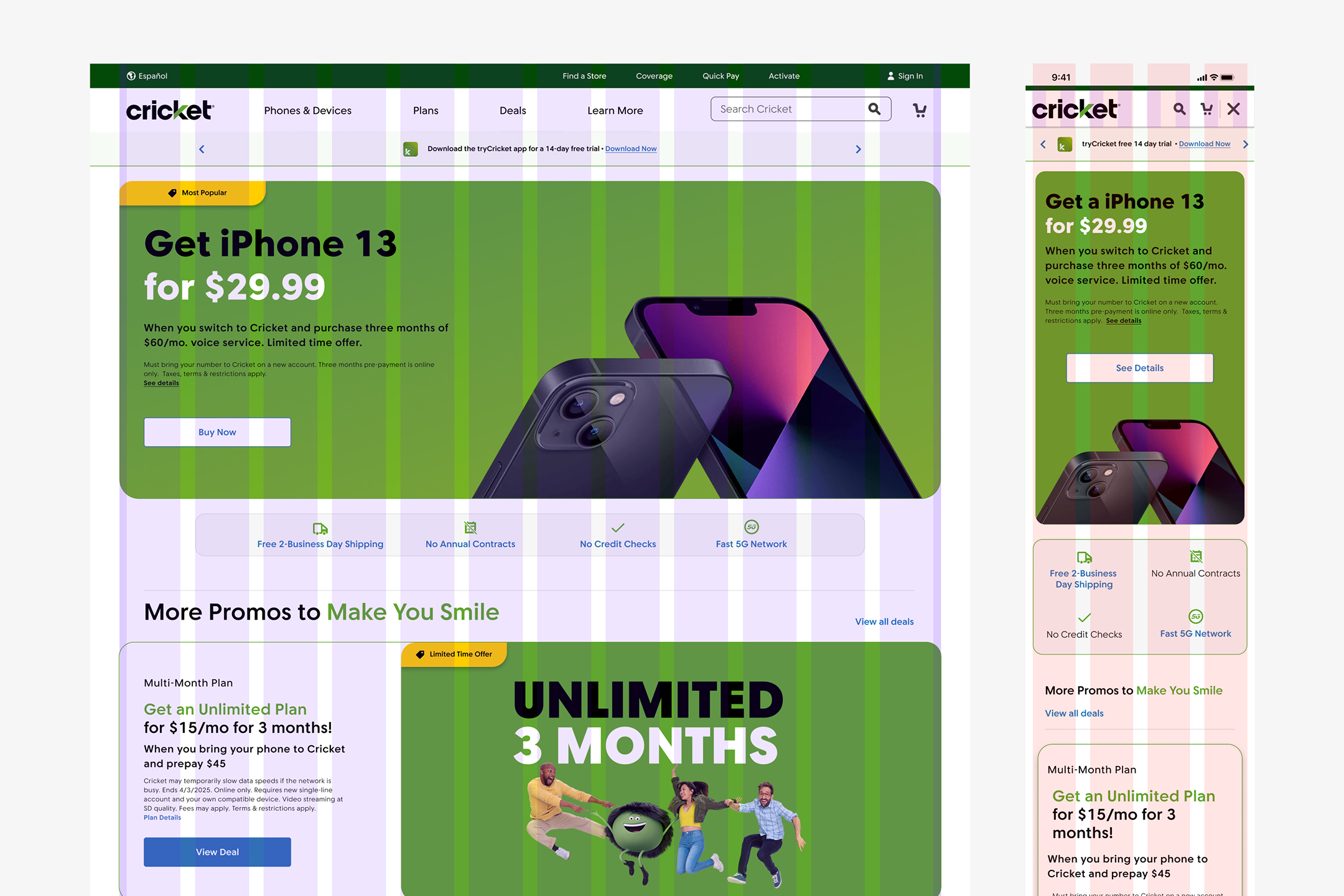
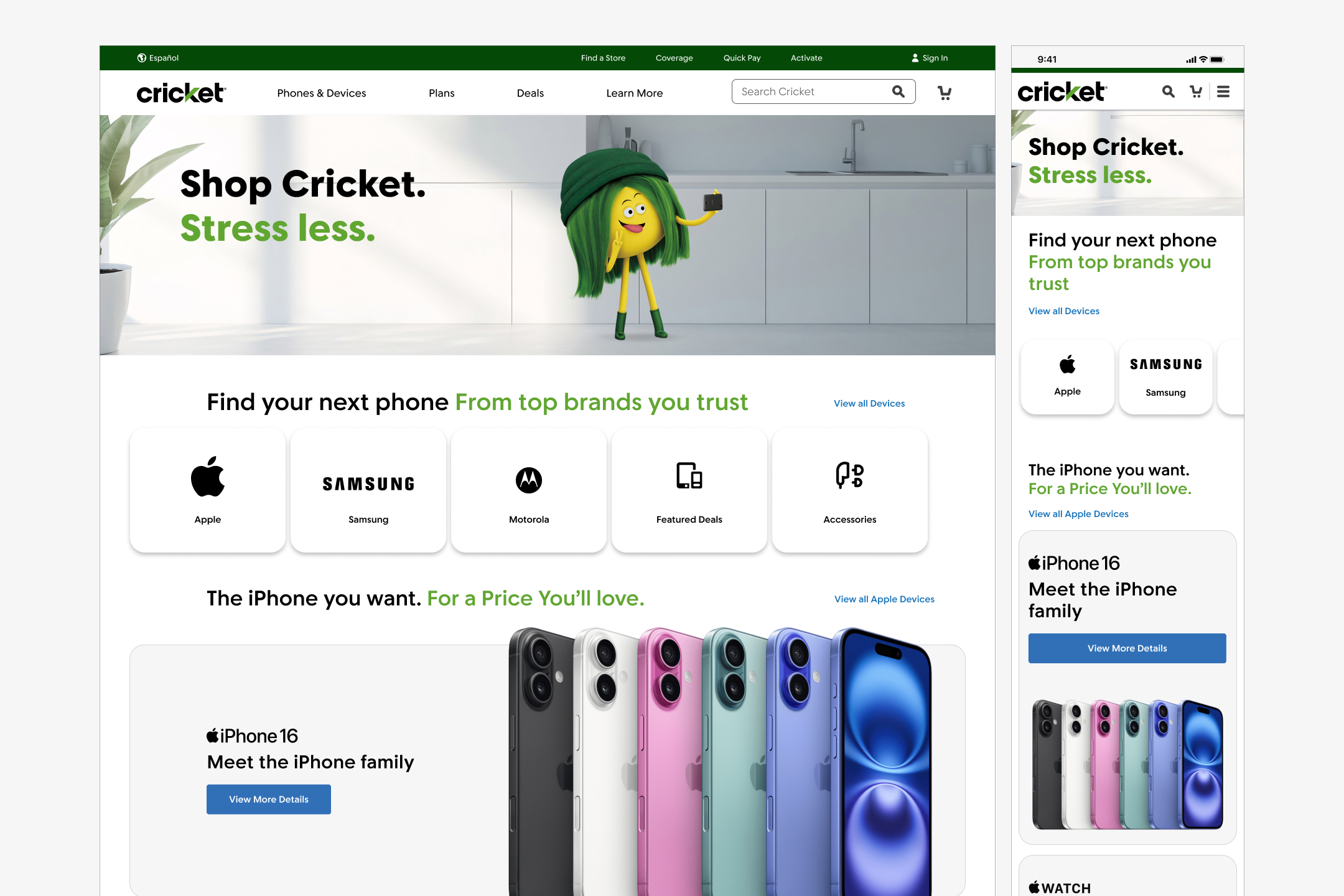
The website leverages both the density pixel grid system and the Bootstrap grid framework to ensure a clean, organized layout and seamless responsiveness across devices.
Hero Section
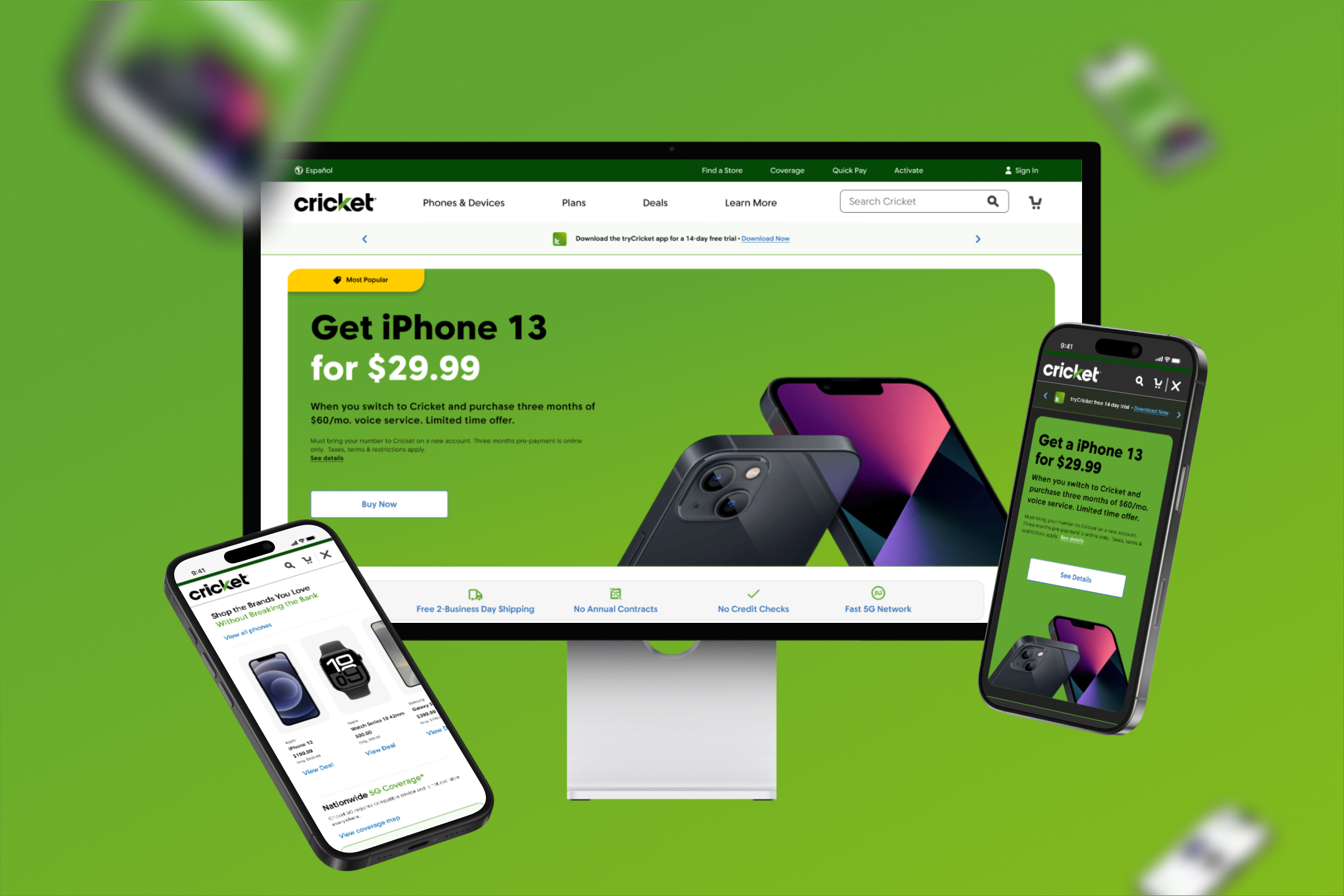
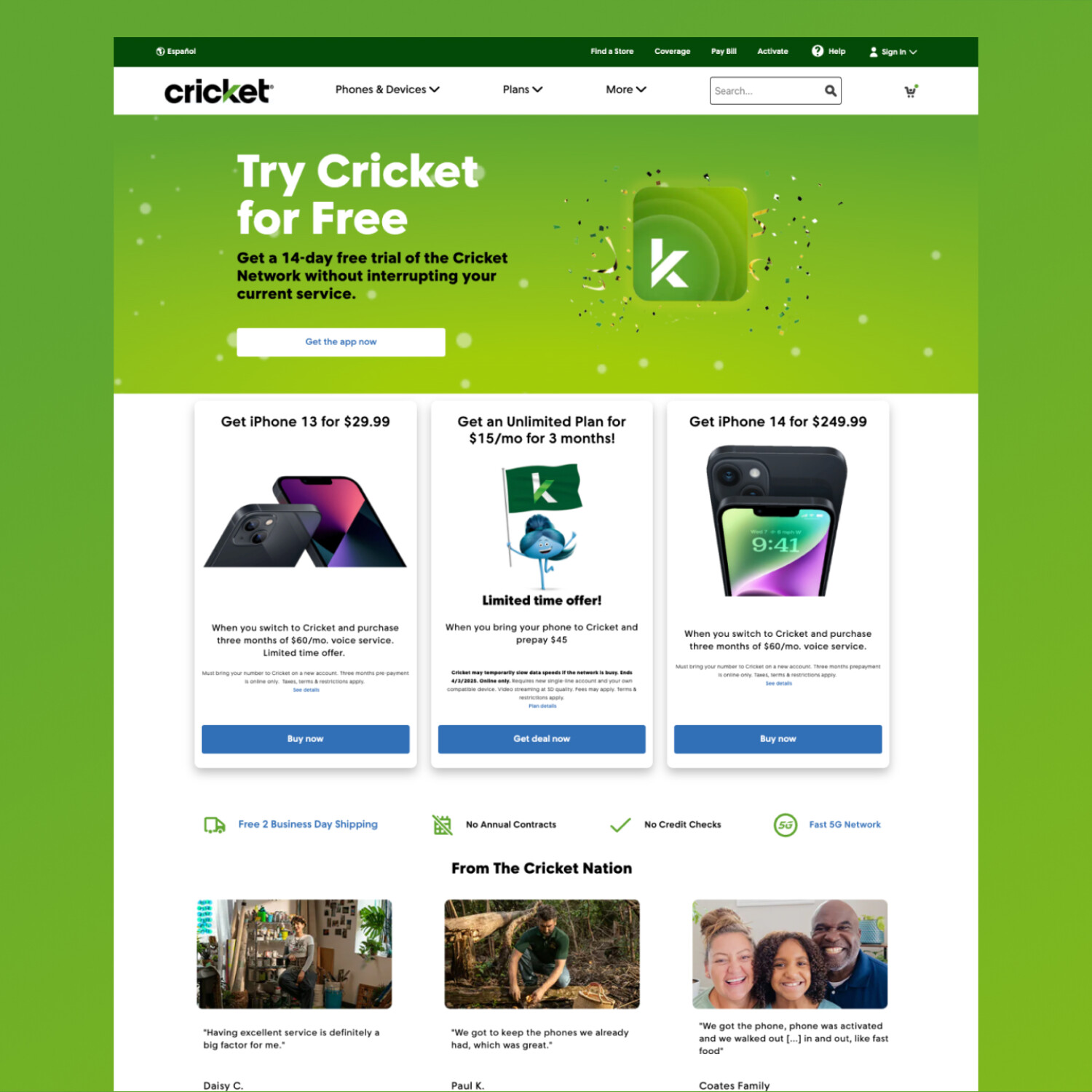
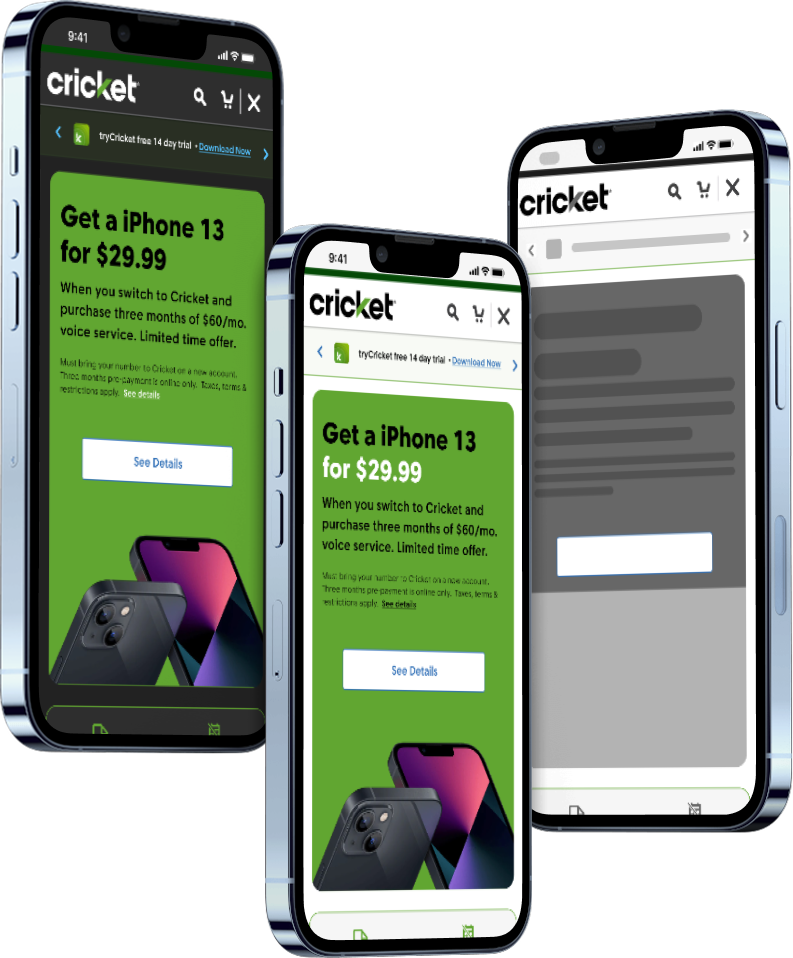
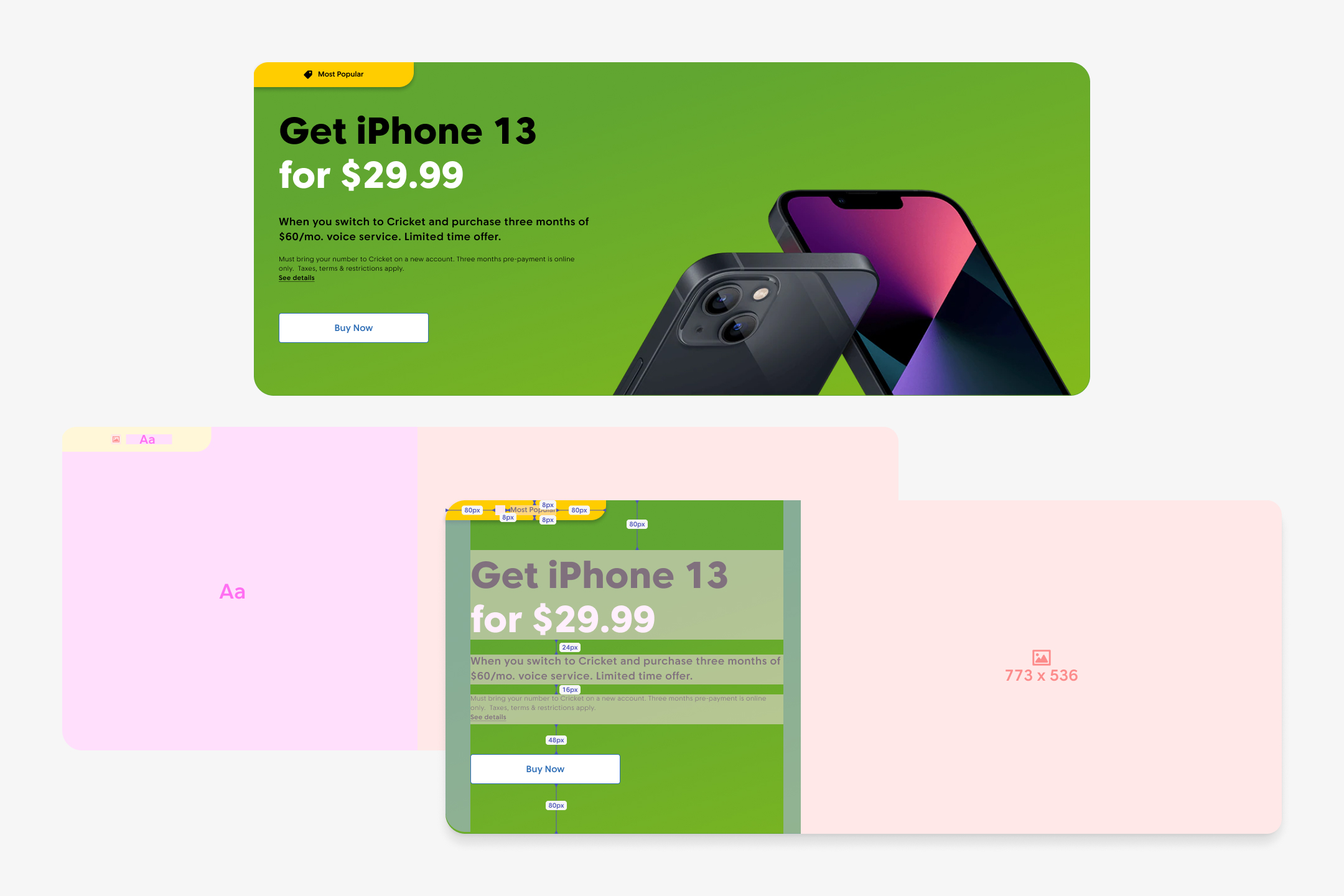
The hero section prominently features the offer “Get iPhone 13 for $29.99” with a bold headline, product image, and a clear CTA button (“Buy Now”). These elements are perfectly aligned within the grid, ensuring visual balance and clarity.
Modular Content Blocks
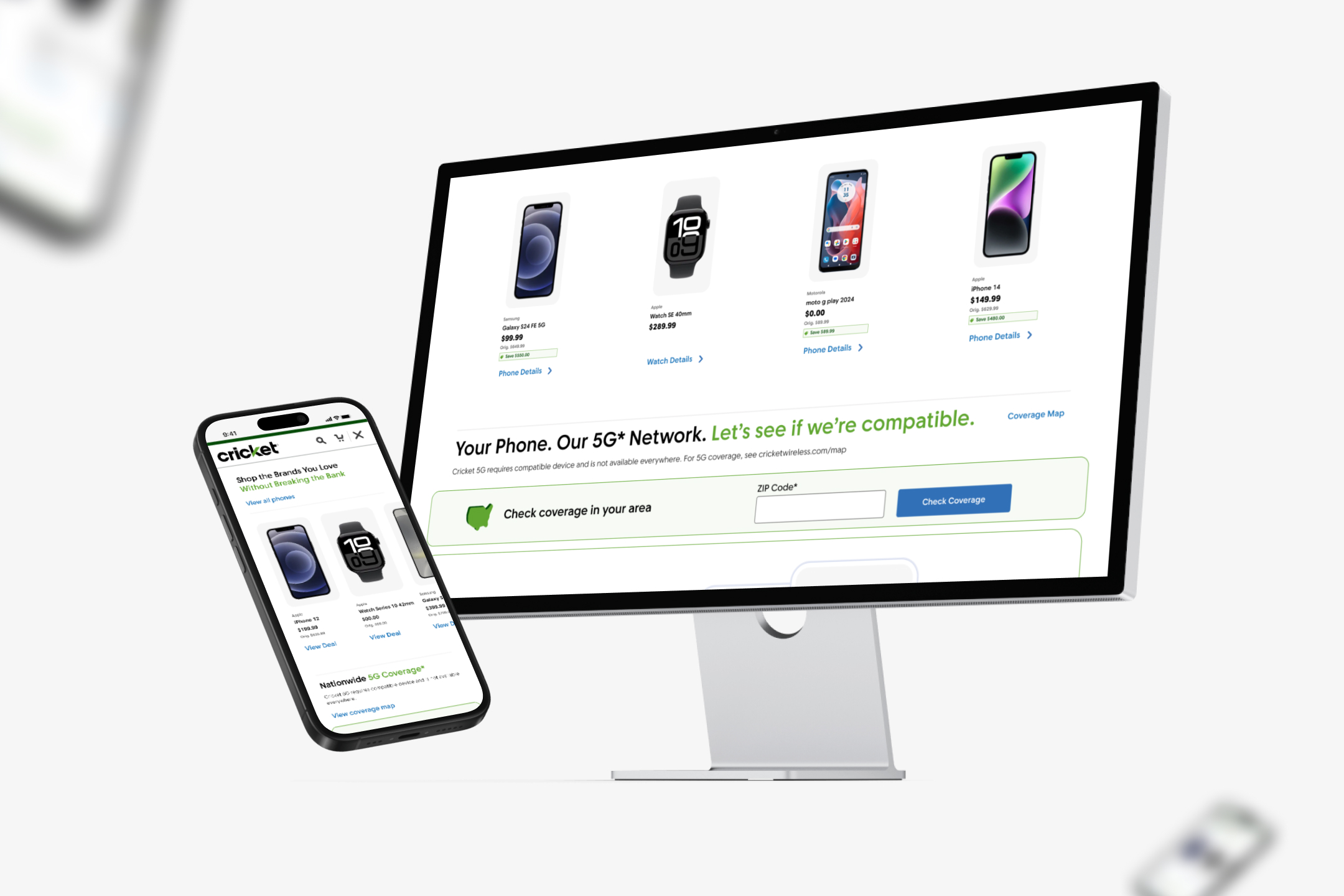
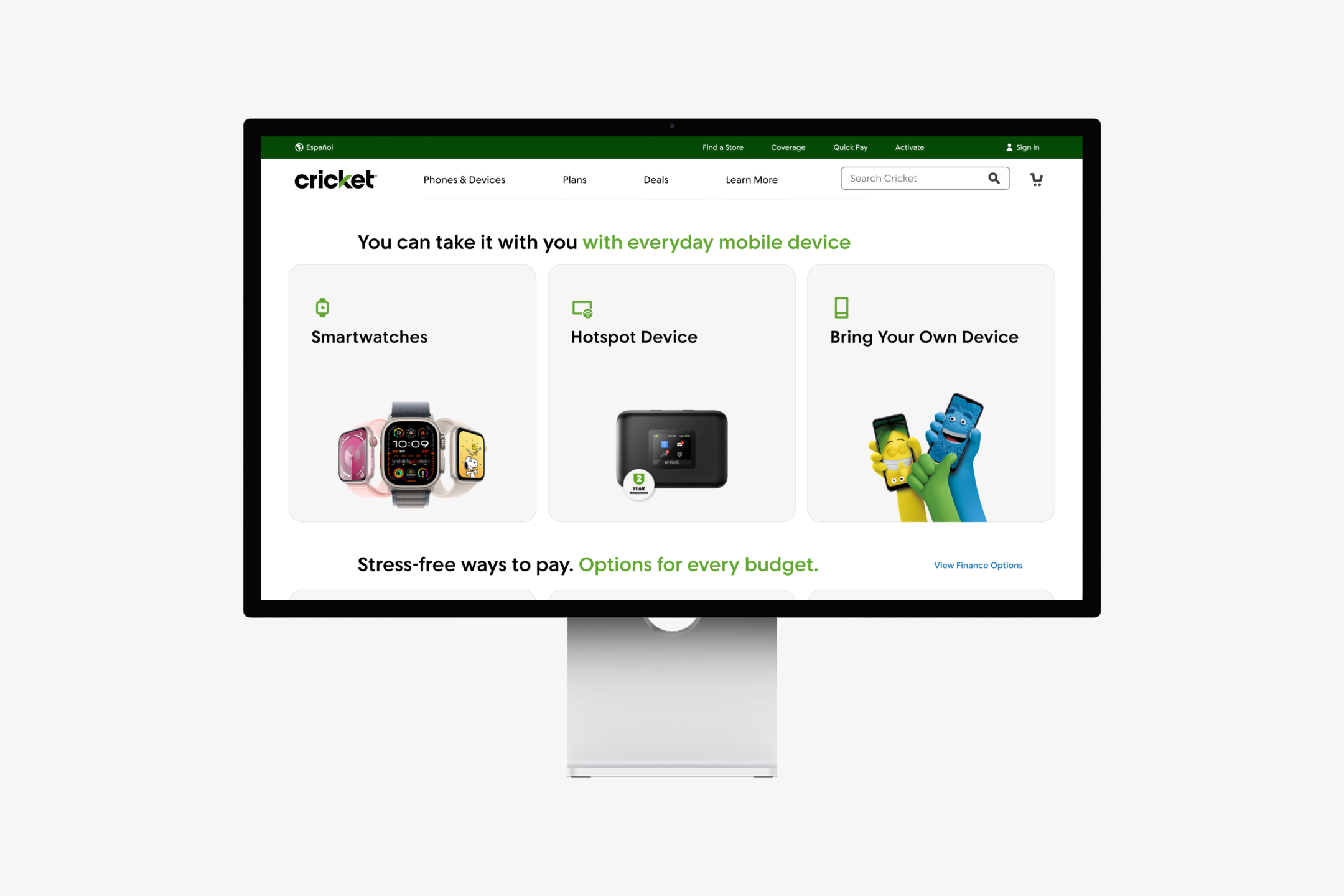
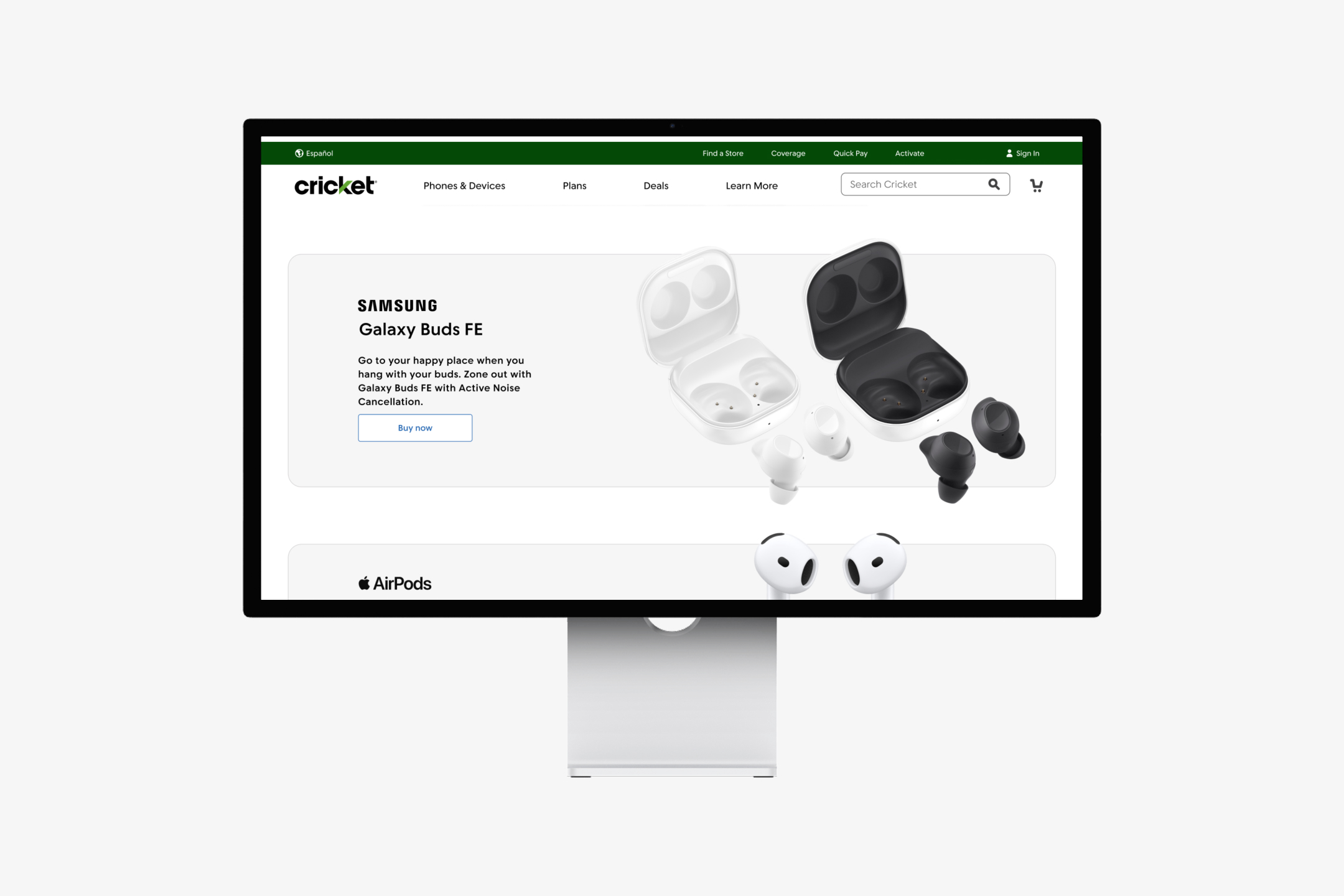
The sections such as “More Promos to Make You Smile” and “Shop the Brands You Love Without Breaking the Bank” utilize a card-based format that aligns neatly within the grid. This modular approach allows for scalability and ensures that the content remains digestible, even on smaller screens.
The Bootstrap grid ensures that the website adapts flawlessly to different screen sizes. For example, the cards in the “More Promos to Make You Smile” section stack vertically on mobile devices, maintaining readability and usability without overcrowding the interface.
All rights reserved. All other copyrights and trademarks are the property of their respective owners.